PRODUCT
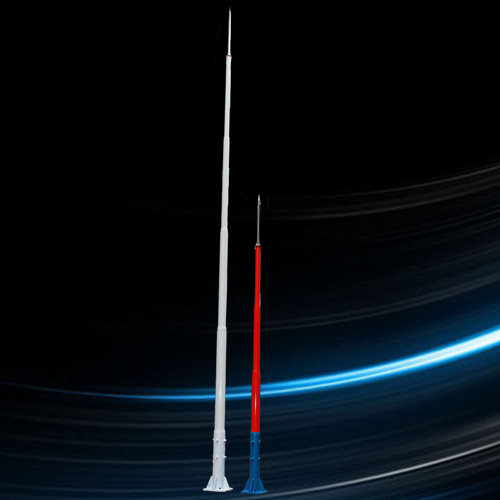
FRP Fiberglass Lightning Support Mast Air Terminal FRP Mast Manufacturer in China
The fiberglass series lightning rods produced by our company are high-tech products jointly developed by multiple partners in the aerospace and non-ferrous metal fields. It is a high-quality lightning rod product that is essential for radar stations to cope with extreme weather conditions.
Fiberglass Lightning Rod:
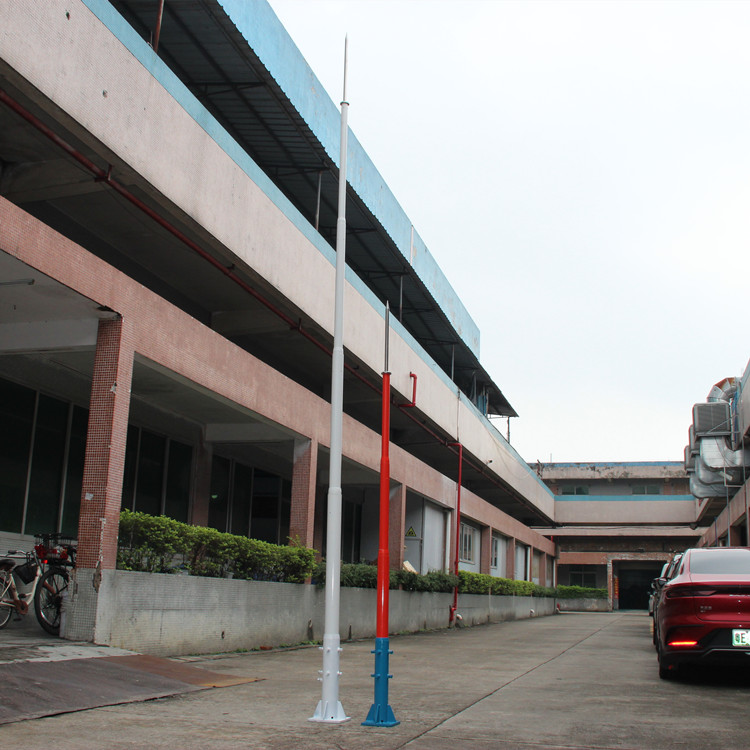
Product Introduction of Fiberglass Lightning Rod
Ⅰ. Product Structure and Function Description:
The fiberglass series lightning rods produced by our company are high-tech products jointly developed by multiple partners in the aerospace and non-ferrous metal fields. It is a high-quality lightning rod product that is essential for radar stations to cope with extreme weather conditions.
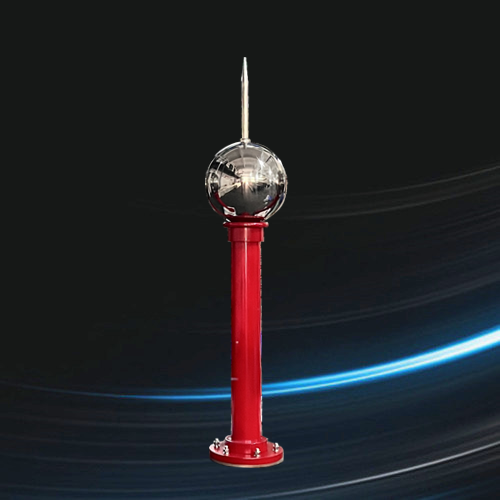
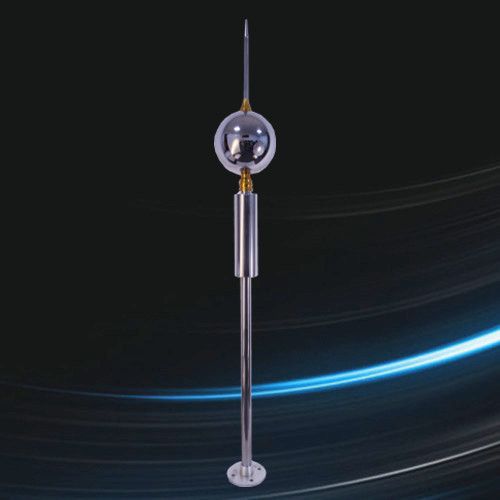
The structure of the fiberglass series lightning rod product consists of three parts: a metal alloy lightning arrester, a fiberglass support rod, and a metal base. It is equipped with a dedicated grounding lead wire for connecting the lightning arrester. When the lightning rod is working normally, the strong lightning current introduced from the lightning rod tip can be directly introduced into the grounding terminal through a dedicated grounding lead wire built into the fiberglass tube, and then directly discharged into the ground terminal.
In terms of material selection and design for product structure, the lightning arrester adopts metal alloy materials based on the principle of charge transfer, utilizing the high resistance characteristics of alloys, adjusting the alloy ratio correctly, controlling the resistance of the needle body, and scientifically customizing the length and inner diameter of the needle body, Ensure that the lightning arrester resonates with lightning waves during flashing, and has the maximum impedance at the peak of lightning current to limit the amplitude of discharge current, reduce electromagnetic radiation hazards, and minimize impact on down conductors and grounding grids;
In terms of the selection of support rod materials for the product, resin glass fiber composite pipes made of aerospace resin glass fiber composite materials through advanced spiral winding technology, namely specially made fiberglass pipes, are used.
The characteristics of the fiberglass support rod are: the raw material is high-performance composite material for aerospace, lightweight, and with the same size and shape, its weight is 30% of the weight of the steel lightning rod.
Ⅱ. Product advantages:
Based on current practical experience in use and operation, the advantages of fiberglass lightning rods are:
1. High product strength: The lightning rod product has twice the strength of ordinary metal lightning rods. It does not reduce efficiency, deform, or damage under harsh conditions such as high lightning intensity and long duration.
2. Strong corrosion resistance: Its corrosion resistance is much better than that of ordinary metal lightning rods, ensuring that lightning rods do not require maintenance and have a service life of more than 20 years.
3. The ability to reduce lightning current is obvious: the material and structure of the lightning arrester are selected based on the principle of charge transfer to limit the amplitude of discharge current and reduce electromagnetic radiation hazards.
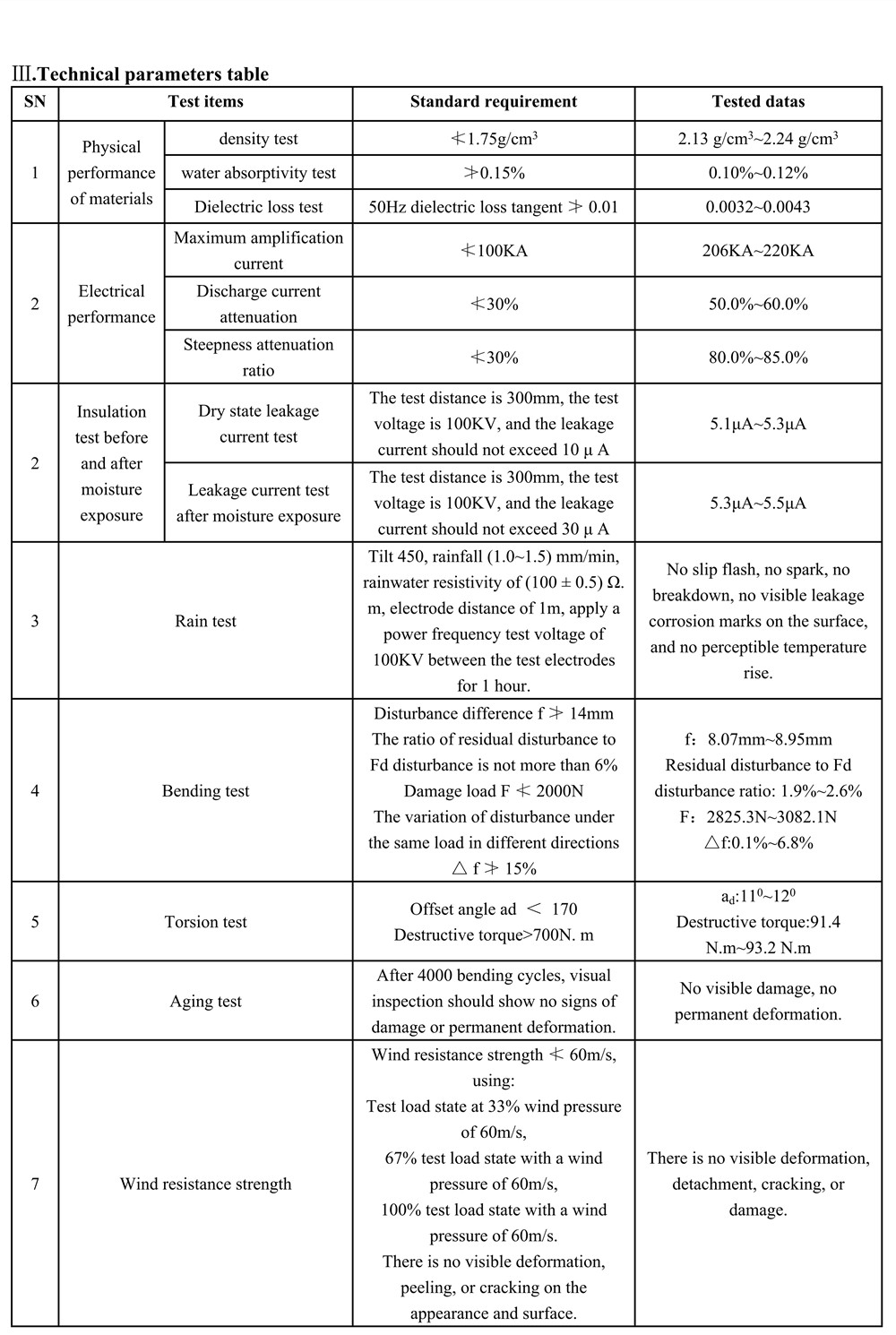
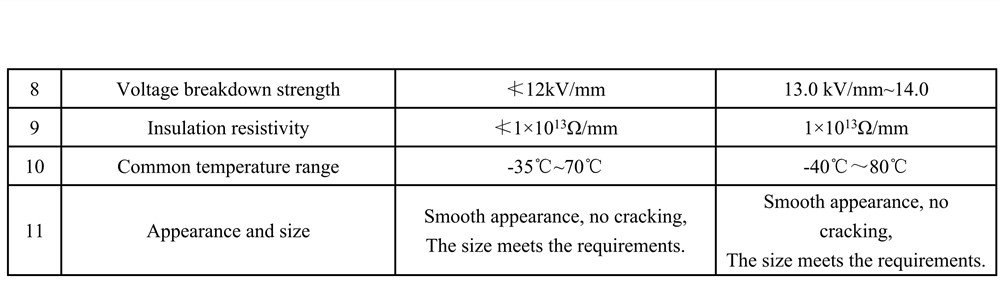
4. Excellent impact resistance and insulation performance: breakdown strength: 14kV/mm, insulation resistance: lxl013Q/mm.
Ⅲ.Technical parameters table
Ⅳ. Product application field and specification parameter description
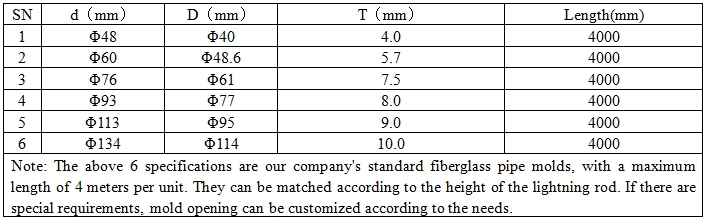
Fiberglass lightning rods are mainly used in fields such as radar stations, airports, and ancient tree protection. Different heights can be customized according to on-site needs, ranging from 2 meters to 22 meters. Heights of 15 meters, 16 meters, and 18 meters are commonly used. At present, our company's specification table for fiberglass pipes is as follows:
Ⅴ.Standard
Ø QX/T2-2016 New generation weather radar station lightning protection technical specifications
Ø QX4-2014 Technical specifications for lightning protection of meteorological stations
Ø QX/T100-2009 Technical Specification for Site Selection of New Generation Weather Radar Stations
Ø GB50057-2010 design code for protection of structures against lightning
Ø GB/T21431-2015 Technical Specification for Testing Lightning Protection Devices in Buildings
Ⅵ.Product installation:
1. The assembly and installation of the fiberglass series lightning rod products are carried out on the construction site. Before installing the lightning arrester into the fiberglass tube, the wiring nose at the upper end of the dedicated grounding downlead copper wire is firmly connected to the wiring terminal screw of the lightning arrester. At the same time, the wiring nose at the lower end of the dedicated grounding downlead copper wire should ensure a reliable connection with the product base or bottom plate (or with the reserved wiring terminal) to ensure reliable electrical continuity of the lightning current channel.
2. The installation bolts of the base or bottom plate of the fiberglass lightning rod product must be reliably welded to the building steel bars, ensuring firmness while meeting the requirements of product installation verticality.
3. For the convenience of product transportation and on-site assembly requirements, our fiberglass lightning rod product's fiberglass support rod is generally configured into multiple segmented components according to the different heights and diameters of the product. After being transported to the site, the customer connects them together according to the specified part number and sequence (marked and assembled by the manufacturer) to form a whole.
During the assembly process of its components, the interface between the two matching components is bonded using a specially designed adhesive material. Generally, a special adhesive is evenly applied to the interface and then screwed into each other for curing to complete the interface assembly. This process is repeated until the entire lightning rod is assembled and cured (during which the straightness of the lightning rod can be adjusted to be no more than 10mm). (The curing time is determined by the time specified on the adhesive), holes are drilled and tapped at each bonding point (to a depth of two pipe wall thicknesses), and after the screw is screwed in, adhesive is applied to the head of the screw;
4. Use a tower crane to place the assembled integral fiberglass lightning rod inside the pillar of the metal base, pour silicone rubber on it, and tighten the 8 positioning screws on it to adjust the verticality to meet the requirements, and then fix it.